
When is enough…. enough in your career?
In a career when we always strive for more, when is enough enough? Dr Jillian Reigert DMD MD one of our Physicians Anonymous Approved Coaches guest blogs on “enoughness”.

In a career when we always strive for more, when is enough enough? Dr Jillian Reigert DMD MD one of our Physicians Anonymous Approved Coaches guest blogs on “enoughness”.

Doctors and those in training are taught to put the needs of others ahead of their own – often to the detriment of their own well-being. Self-compassion can play a vital role in supporting physician wellness and overall work satisfaction.

A Physician’s Anonymous coach shares 7 days of their physician’s burnout diary, moving from resistance to connection and finding self.

“Welcome to the Trauma Surgery Unit” said Prof. “As it’s New Year’s Day we’re expecting a quiet one.” Prof’s sense of irony (i.e. sarcasm) was legendary. That night (first shift) a young man came in. “Stabbed chest. Resus!” came over the PA system, and everyone moved.

You should know: shame is a very, very bad master. And shame does not deserve your respect, because shame is a liar. Shame is also a huge problem in medicine.

In Part 1, we made the case that a career in modern medicine meets the diagnostic criteria for addiction. Medicine can be unhealthy, yet we carry on or feel unable to make healthy changes. In Part 2, we explore how to get sober if you’re addicted to medicine.

“Trauma 1!” I heard them yell. “Let’s go! Let’s go!”
I stood. Frozen. Trying to process all that was going on.
Then I felt a large palm on the upper part of my back.
“Come on, kid. It’s your time to shine”.

The demanding nature of modern medicine places physicians under significant stress and strain, prompting a growing interest in the benefits of therapy to help them navigate the complexities of their profession. Engaging in proactive therapy can offer physicians a unique opportunity to enhance their insight, manage stress, and foster emotional well-being. However, like any intervention, it comes with its own set of advantages and disadvantages.

“Physician heal thyself,” says the aphorism. By extension, we could also say, “Physician know thyself”. Understanding one’s priorities is a crucial aspect of personal development. Here are five self-help exercises, including the obituary/eulogy exercise, to help individuals gain clarity on their priorities:

So the new year is near, and physicians everywhere are planning to make 2024 an even better one. Our intentions may be to engage in more self-care, develop a better LIFE-work-balance, and learn about ourselves in an “examined life”. In this context, the debate between therapy and coaching for physicians takes center stage, raising important questions about the most suitable approach for addressing the unique challenges faced by medical professionals.

As a trained psychiatrist, workaholic, depressive, and (formerly) excellent clinician, I’ve come to the following maxim with apologies to REM: “Everybody needs a little therapy (sometimes)”. As the year winds down and the nights draw in, we are taking time to reflect on 2023. Over the next weeks over the Holidays and after we ring in the new year, Physicians Anonymous will be publishing a series on self-examination.

We’ve achieved a TON in 2023, especially as we are self-funded and run by volunteers. So from 2024- HOW do we reach the suffering physician? How do we let our colleagues know that there is a safe place where they can be human first, healer second? Where they will not be judged, but they will be heard and loved. Where we can laugh and cry together bonded by the commonality of being wounded healers.

Unlike overt resignations, quiet quitting manifests as a subtle withdrawal, marked by disengagement and diminished job satisfaction. To effectively address this issue, it is imperative to delve into the scale of the problem, understand the causes behind this quiet exodus, and propose actionable solutions tailored to mitigate its impact.

As I sit down to reflect on my decision to quit a toxic hospital workplace, I’m overwhelmed by a mix of emotions – relief, anger, and sadness. Leaving a career I had worked so hard for, after just three years as an attending physician, was not an easy choice.

I had lots of ideas about the root causes of my burnout and how my institution could address them. Don’t tell me to take a yoga class, fix the damn EMR!

Burnout almost led me to take my own life. It destroyed my identity as a surgeon. My medical identity and my life were so enmeshed that losing medicine caused me to mourn my own death. From this low point, I have rebuilt. With lots of intensive therapy, and regular mindfulness and other wellness practices I’ve been able to rise from the depths.
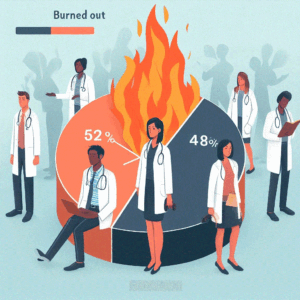
The latest US Physician Burnout & Depression Report (2023) from Medscape finds that physician burnout and depression are worsening. More than half of physicians (52%) reported that they are burned out and nearly 1 in 4 reporting that they are clinically depressed.

Positive affirmations are a powerful tool that can help you fight burnout. If you are feeling overwhelmed by stress, try using positive affirmations to boost your self-confidence and self-esteem. With a little practice, you can start to see a difference in your mood, emotions, and overall well-being.

Doctors, nurses, and other healthcare heroes are often seen as invincible. We’re the ones who care, but who takes care of us?

In a world that constantly demands excellence, where the pursuit of perfection is the norm, there lies a secret joy hidden in the unlikeliest of places – the realm of mediocrity in medicine.

How an obsession with success can lead to physician burnout; and strategies for mitigation