
My personal Dark Night as a physician
My journey through the dark night of the soul as a physician was profound and transformative. It challenged my identity, purpose, and resilience, leading to a deep exploration of myself.

My journey through the dark night of the soul as a physician was profound and transformative. It challenged my identity, purpose, and resilience, leading to a deep exploration of myself.

I believe we can come out of this crisis with a new culture of a caring community. But this is only possible if we invest in self-compassion.

Self-compassion does not make you soft. Boundaries do not make you closed off nor selfish. I had to repeat this many times before I started to understand how true and how essential self-compassion and boundaries are in our lives.

Every doctor starts with innocent wonder, but medical training forces an evolutionary shift. Explore the hidden cost of becoming a “shark” in medicine.

Every doctor starts with innocent wonder, but medical training forces an evolutionary shift. Explore the hidden cost of becoming a “shark” in medicine.

Every doctor starts with innocent wonder, but medical training forces an evolutionary shift. Explore the hidden cost of becoming a “shark” in medicine.
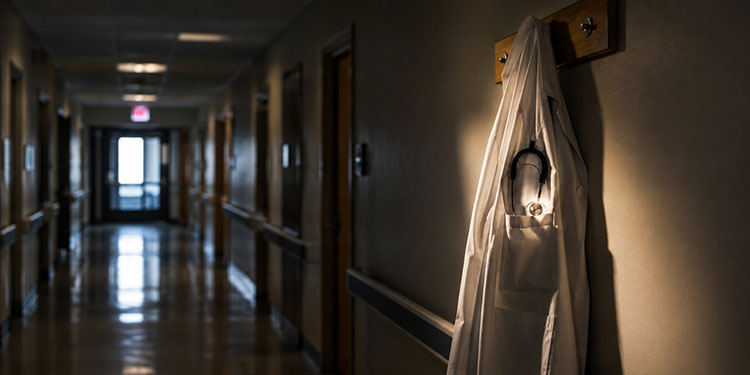
Every doctor starts with innocent wonder, but medical training forces an evolutionary shift. Explore the hidden cost of becoming a “shark” in medicine.

In a career when we always strive for more, when is enough enough? Dr Jillian Reigert DMD MD one of our Physicians Anonymous Approved Coaches guest blogs on “enoughness”.

Doctors and those in training are taught to put the needs of others ahead of their own – often to the detriment of their own well-being. Self-compassion can play a vital role in supporting physician wellness and overall work satisfaction.

A Physician’s Anonymous coach shares 7 days of their physician’s burnout diary, moving from resistance to connection and finding self.
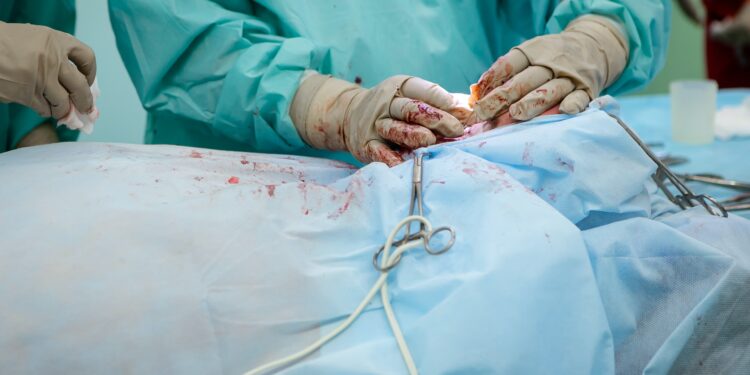
“Welcome to the Trauma Surgery Unit” said Prof. “As it’s New Year’s Day we’re expecting a quiet one.” Prof’s sense of irony (i.e. sarcasm) was legendary. That night (first shift) a young man came in. “Stabbed chest. Resus!” came over the PA system, and everyone moved.

You should know: shame is a very, very bad master. And shame does not deserve your respect, because shame is a liar. Shame is also a huge problem in medicine.