
Corrigan’s secret door and other stories
If you’ve not heard of Corrigan’s Secret Door, you’re in for a treat. Based on a legendary Irish physician, the Secret Door denotes a metaphorical escape route for busy physicians from their hectic clinics.

If you’ve not heard of Corrigan’s Secret Door, you’re in for a treat. Based on a legendary Irish physician, the Secret Door denotes a metaphorical escape route for busy physicians from their hectic clinics.

My career and life crashed to a halt after 25 years in clinical medicine. I was at one point “suicidal with planning and intent”. Medical knowledge in the hands of a suicidal physician can be deadly. As an affluent, respected physician, confident in my position, well-liked and admired by society, yet suffering inside, why did I not seek help?

In this article, Part 2, I concede that there are some excellent principles differentiating ineffective from effective physician resilience programs. We hope that colleagues and medical leaders designing such programs will find the guidance useful, and further grasp the nettle of addressing the root causes of physician burnout.

Resilience programs, springing up like mushrooms, are a sticking plaster to avoid dealing with the fungating tumor underneath. We have to talk openly about the demands of modern medicine and how these are hurting the healers we need the most.

Practicing medicine is making us physicians sick. Physicians in the US have some of the highest burnout, mental illness, addiction, and suicide rates in the world. Medical student and physician burnout and suicide are a “silent epidemic”.

Modern medicine is no stranger to the toxic trio of burnout, stress, and dissatisfaction, and perfectionism plays the role of the puppet master. It’s time to swap the scalpel for a mirror and reflect. Bowlby’s framework challenges physicians to redefine excellence, shifting from unattainable perfection to a sustainable “good enough” approach.

My biggest fear in medicine is messing up. Inevitably, it happens. And while we rightly are trained to reflect, detect and learn from errors, improve practice, and ultimately save lives, the flip side – the cost of excessive perfectionism – can be very high, especially on physician well-being.

Behind the crisp white coats and stethoscopes, there lies a silent majority—physicians who are silently suffering from the immense pressures of their profession — and barriers to help.

The demanding nature of modern medicine places physicians under significant stress and strain, prompting a growing interest in the benefits of therapy to help them navigate the complexities of their profession. Engaging in proactive therapy can offer physicians a unique opportunity to enhance their insight, manage stress, and foster emotional well-being. However, like any intervention, it comes with its own set of advantages and disadvantages.
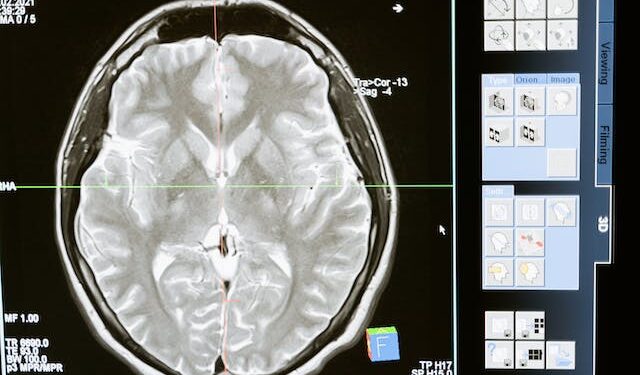
“Physician heal thyself,” says the aphorism. By extension, we could also say, “Physician know thyself”. Understanding one’s priorities is a crucial aspect of personal development. Here are five self-help exercises, including the obituary/eulogy exercise, to help individuals gain clarity on their priorities:

So the new year is near, and physicians everywhere are planning to make 2024 an even better one. Our intentions may be to engage in more self-care, develop a better LIFE-work-balance, and learn about ourselves in an “examined life”. In this context, the debate between therapy and coaching for physicians takes center stage, raising important questions about the most suitable approach for addressing the unique challenges faced by medical professionals.

As a trained psychiatrist, workaholic, depressive, and (formerly) excellent clinician, I’ve come to the following maxim with apologies to REM: “Everybody needs a little therapy (sometimes)”. As the year winds down and the nights draw in, we are taking time to reflect on 2023. Over the next weeks over the Holidays and after we ring in the new year, Physicians Anonymous will be publishing a series on self-examination.